
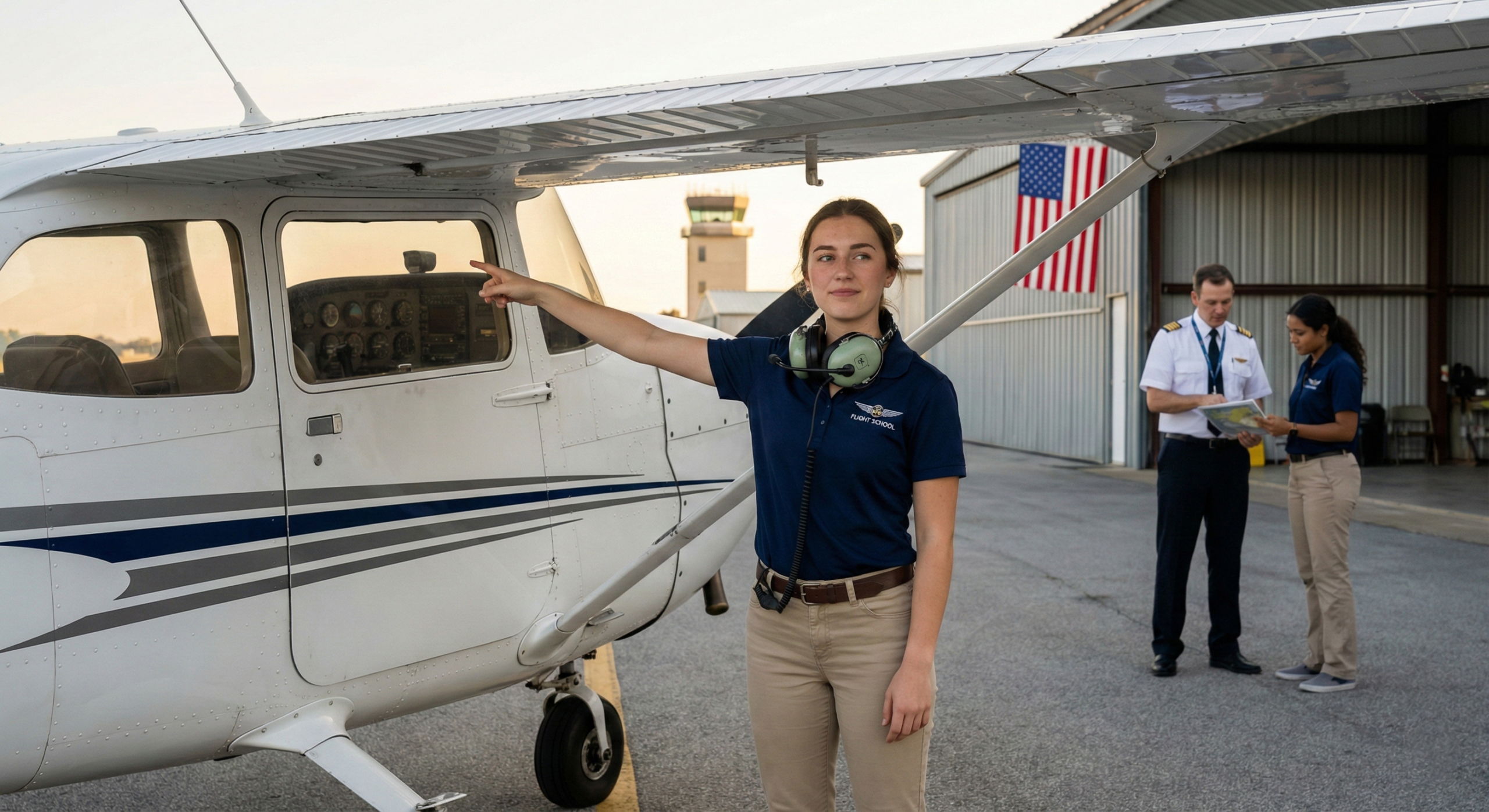
 The dream of flight is universal, yet for many aspiring aviators, that dream remains grounded by fear and misinformation. In the age of the internet, pilot training myths travel faster than the speed of sound. You may have heard rumors from friends, relatives, or online forums that suggest becoming a pilot is too hard, too expensive, or too risky.
At World Wide Wings, we encounter these misconceptions every day. We see talented individuals hesitate to pursue their passion because they have been fed inaccurate information. The reality of flight training in the United States is far more accessible, structured, and logical than most people realize.
It is time to clear the air. By separating fact from fiction, we can help you navigate the runway to a successful career with confidence. Let’s debunk the five most common myths about studying aviation in the USA.
Myth One: “It Is Impossibly Expensive”
The Myth:
Many families believe that pilot training is a luxury reserved only for the ultra-wealthy. They see the initial price tag of flight school and assume it is an insurmountable financial burden, often comparing it to the cost of a luxury car rather than an educational investment.
The Fact:
While aviation training requires a significant investment, it is comparable to other professional degrees like medicine or engineering, often with a faster return on investment. The key lies in how you approach the training.
At World Wide Wings, we champion the “Learn & Earn” model. This approach fundamentally changes the financial equation. Instead of paying for years of training without any income, our students transition from paying customers to paid professionals during the program itself.
- Scholarships: We offer substantial scholarships to meritorious students, significantly reducing the initial tuition fees.
- Earning Potential: Once students earn their Certified Flight Instructor ratings, they can begin working. This allows them to earn a professional income while building the necessary flight experience. This income helps offset living expenses and training costs, making the net cost of the program much more manageable.
- Faster ROI: Unlike a medical student who might study for nearly a decade before earning a full salary, a pilot can enter the workforce relatively quickly, starting their journey toward financial independence sooner than many of their peers.
Myth Two: “You Need to Be a Genius in Physics and Maths”
The Myth:
A pervasive belief exists that you must be a mathematical prodigy or a physics genius to fly a plane. Students often fear that if they didn’t top their class in calculus, they have no future in the cockpit.
The Fact:
You do not need to be a rocket scientist to be a pilot; you need to be a practical problem solver. While a solid foundation in high school-level math and physics is necessary, the application in aviation is highly practical.
- Practical Application: Pilots use mental math to calculate fuel consumption, estimated time of arrival, and descent rates. It is about quick, accurate arithmetic rather than complex calculus or abstract theory.
- Technology Assists: Modern aircraft are equipped with advanced flight computers that handle the heavy lifting. The pilot’s role is to verify and interpret that data.
- Critical Skills: Far more important than being a “math genius” are skills like situational awareness, decision-making, hand-eye coordination, and communication. If you have a logical mind and the ability to stay calm under pressure, you have the raw materials to become an excellent pilot.
Myth Three: “An FAA License Isn’t Useful in India”
The Myth:
Some students worry that training in the USA will leave them with a license that is invalid back home. They fear that an FAA (Federal Aviation Administration) license is a piece of paper that holds no weight with the DGCA (Directorate General of Civil Aviation) in India.
The Fact:
This is one of the most damaging pilot training myths. The reality is quite the opposite. The FAA license is widely considered the “gold standard” of aviation globally.
- Global Recognition: An FAA license is recognized and respected by aviation authorities around the world. It proves you have trained in diverse weather conditions and busy airspaces, adhering to the strictest safety standards.
- Streamlined Conversion: The process of converting an FAA license to a DGCA license is a well-established, structured procedure. Thousands of Indian pilots flying for major domestic carriers today trained in the USA and successfully converted their licenses.
- The World Wide Wings Advantage: We ensure our training programs are DGCA Approved. This means our curriculum aligns with Indian regulations, making the conversion process smooth and straightforward for our graduates. We guide our students through the paperwork, ensuring they are ready to fly in India or anywhere else the global market takes them.
Myth Four: “Getting a U.S. Visa Is Too Difficult”
The Myth:
The visa process is often viewed as a black box of rejection and bureaucracy. Many prospective students feel defeated before they even apply, believing that obtaining a U.S. student visa is a matter of luck rather than preparation.
The Fact:
Obtaining a U.S. visa is a rigorous process, but it is logical and rule-based. It is not a lottery; it is a verification of your intent and ability to study.
- Structured Pathway: As a SEVIS-approved institution, World Wide Wings issues the I-20 form, which is the foundational document needed to apply for an M-1 visa.
- Support System: We assist our students with every step of the visa application. This includes guidance on financial documentation and interview preparation.
- Clear Intent: Visa officers are primarily looking for legitimate students who have a clear educational plan and the means to support themselves. When you have an offer letter from a reputable flight school and a clear career path, the probability of success is high.
Myth Five: “The Job Market for Pilots Is Too Competitive”
The Myth:
This myth often stems from cyclical downturns in the economy. People hear stories of pilots struggling to find work during a recession and assume the door is permanently closed. They believe the market is saturated and that new pilots will struggle to find a seat.
The Fact:
The aviation industry is currently facing a significant global pilot shortage. Airlines are expanding their fleets to meet the surging demand for travel, but the supply of qualified pilots has not kept pace.
- Retirement Waves: A massive generation of senior captains is reaching mandatory retirement age, creating a vacuum at the top that must be filled by new first officers.
- Quality Over Quantity: While the market is competitive, it is competitive for quality. Airlines are desperate for well-trained, professional pilots with high safety standards.
- The US Advantage: Training in the USA gives you a distinct edge. You gain experience in complex environmentslike the busy airspace of Southern California or the diverse weather of Floridathat simple training programs cannot replicate. Graduates with US experience and a degree are highly sought after by recruiters globally.
Conclusion: Let Facts Guide Your Flight Plan
Choosing a career is one of the most important decisions you will make. It should be based on facts, data, and clear career pathways not on hearsay or fear.
The myths surrounding pilot training often discourage those who would be best suited for the cockpit. The truth is that pilot training facts paint a picture of an accessible, rewarding, and financially viable career. With the right mentorship, the “Learn & Earn” model, and a world-class education from World Wide Wings, the obstacles are far smaller than they appear.
Don’t let misconceptions keep you on the ground. The sky is open, and the industry is waiting for the next generation of leaders.