
 For many, the dream of becoming a pilot consists of a singular, romanticized image: a crisp uniform, a golden sunset, and the smooth control of a massive aircraft. While this is the ultimate destination, the journey to get there is a rigorous, disciplined, and deeply rewarding adventure.
The student pilot life is unlike any typical university experience. It is a lifestyle where the classroom is at thirty thousand feet (or a few thousand, to start), and homework involves understanding the physics of flight and the intricacies of weather patterns. At World Wide Wings, our campuses in San Bernardino, California, and Hollywood, Florida, offer the perfect backdrop for this transformation. With consistent sunshine and active airspaces, our students live and breathe aviation every single day.
If you are an aspiring aviator, you might wonder: What does a typical day actually look like? Here is a glimpse into the daily routine of a cadet training in the United States.
The Early Morning: Discipline and Preparation
In aviation, the day often begins before the sun comes up. The life of a pilot is governed by discipline, and that starts with the morning routine.
Weather Checks and Flight Planning
Before a student even heads to the hangar, the work begins. A good pilot is always ahead of the aircraft. This means checking METARs (Meteorological Aerodrome Reports) and TAFs (Terminal Aerodrome Forecasts) on their iPad or phone. Is the visibility clear? Are the winds within personal limits?
At our flight schools, safety is the number one priority. Students learn early on to make “Go/No-Go” decisions. If the weather in California has the infamous marine layer rolling in, or if summer storms are brewing off the coast of Florida, the schedule shifts. This adaptability is the first lesson of the day.
Ground School: The Theory Behind the Skill
Before you can execute a maneuver in the air, you must understand it on the ground. Morning sessions often involve Ground School. This isn’t just listening to a lecture; it is an interactive deep dive into aerodynamics, aircraft systems, navigation, and federal aviation regulations.
Whether discussing the fuel systems of a Cessna or the electrical components of a Piper, students must master the theory. In our “Learn & Earn” culture, students pay extra attention, knowing that one day soon, they will be the instructors teaching these very concepts to the next generation.
The Afternoon: Taking to the Skies
Once the morning fog burns off and the theory is digested, it is time for the main event: flight training. This is the heartbeat of flight school USA.
The Ritual of the Pre-Flight Inspection
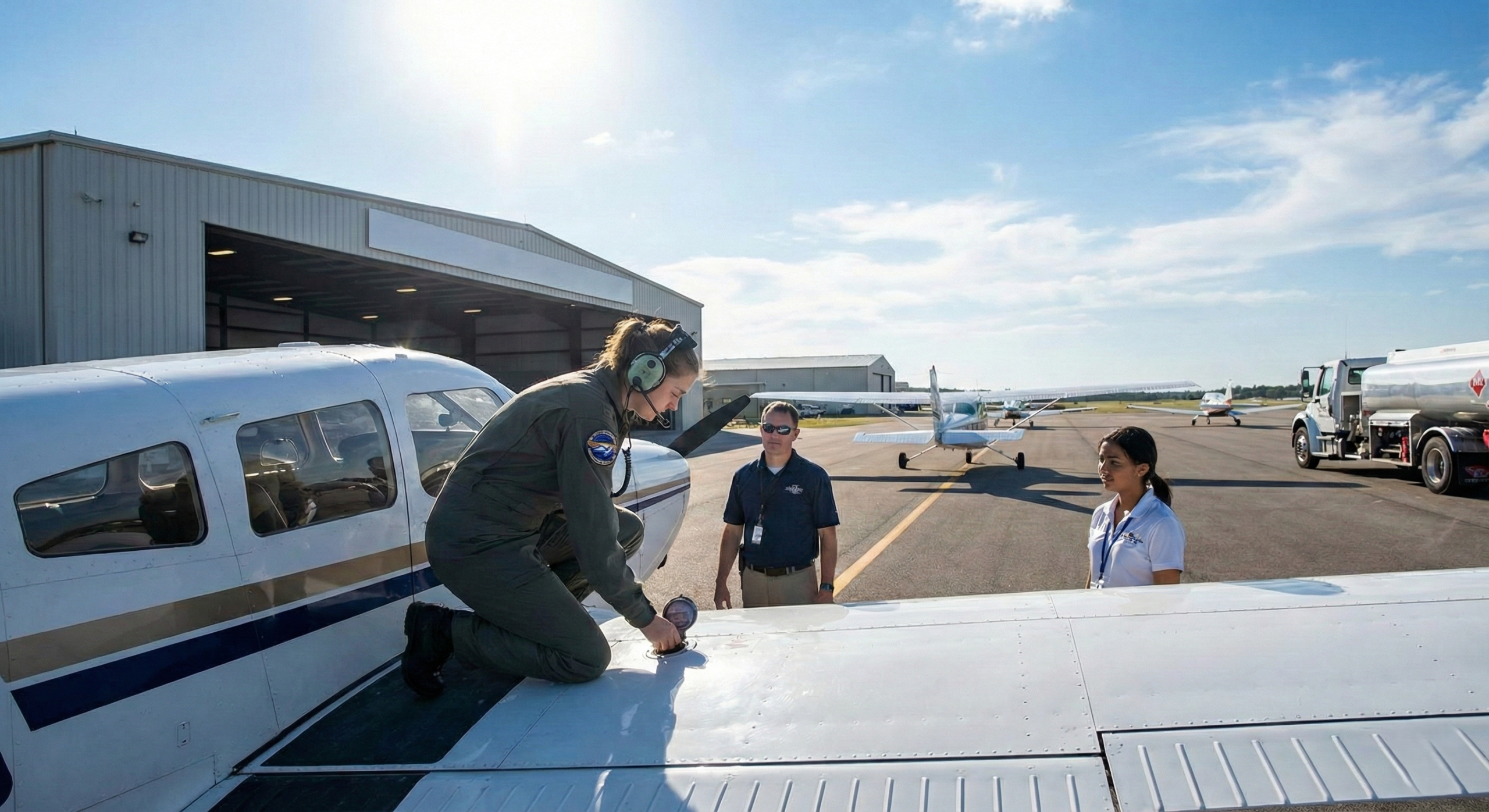
Walking out to the tarmac, the student approaches their assigned aircraft. This is where the bond between pilot and machine is formed. The pre-flight inspection is a non-negotiable ritual.
The student walks around the aircraft with a checklist in hand. They check the control surfaces for freedom of movement, inspect the fuel quality to ensure no contaminants, check oil levels, and examine the tires. At World Wide Wings, we operate a modern fleet, but we teach our students to inspect every plane as if their life depends on it because it does. This meticulous attention to detail is what separates a hobbyist from a professional.
Cleared for Takeoff
Strapping into the cockpit, the headset goes on, and the world goes quiet except for the crackle of Air Traffic Control (ATC). Communication is a critical skill. Our students train at airports like San Bernardino International (SBD) or North Perry, which means they often share the airspace with corporate jets and cargo giants. This exposure to complex airspace from day one is invaluable.
The engine roars to life. Taxiing to the runway, completing the run-up checks, and finally receiving that golden call: “Cleared for takeoff.”
In-Flight Maneuvers
The flight lesson itself is intense but exhilarating. Depending on the stage of training, a student might be practicing:
- Steep Turns: Learning to control the aircraft while banking sharply, fighting G-forces.
- Stalls: Intentionally stalling the wing to learn how to recover quickly and safely.
- Pattern Work: The repetitive but essential practice of taking off and landing, perfecting the approach, and mastering the “flare” for a smooth touchdown.
For a student pilot, there is no feeling comparable to the “Solo Flight”the first time the instructor steps out, and you take the aircraft up alone. It is a rite of passage that stays with a pilot forever.
The Evening: Debrief and Community
Landing the plane doesn’t mean the work is done. As the sun sets over the California mountains or the Florida horizon, the learning continues.
The De-Brief: Where Learning Happens
Every flight is followed by a debriefing session with the instructor. This is arguably the most important part of the pilot training daily routine. The instructor and student review what went right and, more importantly, what needs improvement.
Did you maintain altitude during the turn? Was your radio call clear? Was your landing approach stable? This constructive criticism helps students refine their skills and prepares them for the high standards of the FAA checkrides.
Simulator Sessions
Sometimes, the training moves from the cockpit to the simulator. Simulators are crucial for practicing emergency procedures or instrument flying without the risks or costs of a real flight. It allows students to pause, reset, and try againa luxury not available in the sky.
Life Beyond the Tarmac
Being a student pilot in the USA is not all work; it is also about building a global family. The community at World Wide Wings is diverse, with students from India, Asia, and across the globe.
Evenings are often spent in the student lounge or shared accommodations, studying charts together, quizzing each other on regulations, or simply relaxing. The bond formed here is unique; these are the future captains who will one day cross paths in airports around the world.
Living in the US also offers a rich cultural experience. On rest days, students might explore the beaches of Miami, hike the trails of California, or visit aviation museums. This balance of intense focus and cultural exploration makes the life in flight school a holistic period of personal growth.
Conclusion: A Lifestyle of Excellence
The student pilot life is demanding. It requires early mornings, late nights of studying, and the resilience to handle the pressure of performance. But it is also incredibly rewarding.
Every day brings a new challenge and a new view from the office window. From the first ground school class to the moment you earn your Commercial Pilot License, the journey is transformative. At World Wide Wings, we provide the ecosystem, the aircraft, and the mentorship to turn this daily routine into a lifelong career.
The sky is not just a place to fly; it is a place to belong. If you are ready to embrace this disciplined and exciting lifestyle, your seat in the cockpit is waiting.